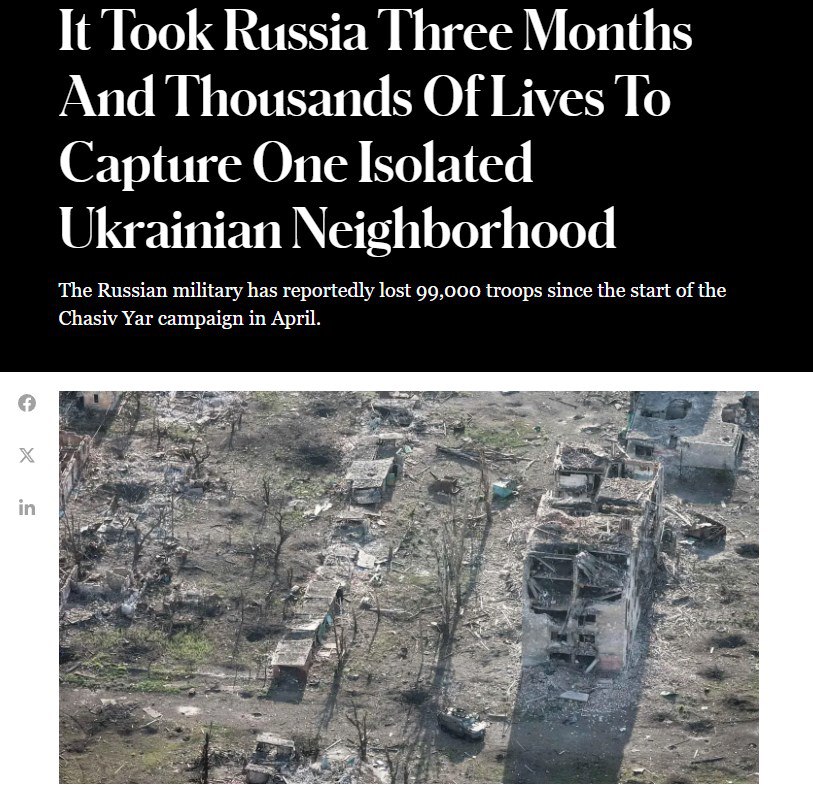
According to Forbes, it took Russia three months and thousands of lives to capture a single isolated district in Ukraine. The battle for a tiny part of Chasiv Yar has become one of the most costly in terms of casualties for the Russian military. Since the beginning of this campaign, the Russian army has lost 99,000 troops, Forbes reports.
Retired Australian Army General Mick Ryan noted that despite some ground successes, Russia paid a tremendous price for them. “Spending so many lives for such a minor gain, Russia missed its last chance to deliver a decisive blow to Ukraine in this war,” the publication quotes the general.
Russian Army Losses: Human and Technical Resources
Russian forces are advancing, suffering enormous losses in both personnel and equipment. In contrast, Ukrainian losses are significantly smaller. For every town or even district captured, the Russians bury tens of thousands of their soldiers. It is important to highlight that the Ukrainian garrison in Chasiv Yar continues to put up a fierce resistance.
Ukrainian Army spokesperson Nazar Voloshyn reported that the garrison retreated a few blocks west, across the Siverskyi Donets-Donbas canal from north to south, as Russian bombs and artillery destroyed all the buildings in the canal area. Despite this, Ukrainian defenders continue to fight back against the aggressor.
The Context of Russian Aggression: Consequences for Ukraine
Russian aggression in Ukraine has been ongoing for several years, and each attempt to seize new territories results in significant human losses for both sides. However, despite these losses, Ukrainian forces skillfully defend their positions, utilizing modern technologies and strategic approaches.
Conclusions and Future Prospects
Despite the losses and destruction, Ukraine demonstrates resilience and determination in its fight for independence. Russian aggression is becoming increasingly costly and futile, which may force the Russian leadership to reconsider its plans and strategies.
Read also: Ukrainian Drones: The Secret Weapon Shaping the Geopolitical Map